


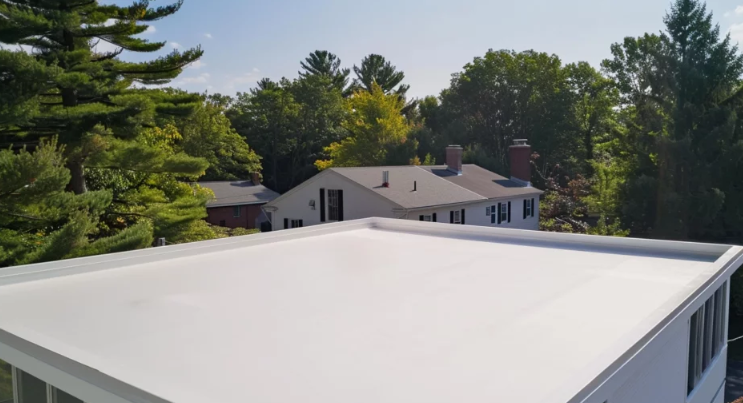
TPO/PVC Roofing in Indian Hills, KY: What Property Owners Need to Know
Need Affordable TPO/PVC roofing in Indian Hills? Compare commercial flat roof materials, costs, and find certified Kentucky contractors.
Indian Hills sits in eastern Jefferson County, about 10 miles east of downtown Louisville. The community blends residential estates with small commercial properties along Shelbyville Road and nearby corridors. If you own a business, manage a retail center, or maintain a multi-family property with a flat or low-slope roof, you face a specific set of decisions. The roof over your commercial building protects inventory, equipment, and tenants. When it leaks or nears the end of its life, you need a solution that balances cost, durability, and energy efficiency.
What does TPO/PVC roofing installation actually involve in Indian Hills? It depends on your building type, roof condition, and budget. Some property owners choose TPO for its reflective surface and lower upfront cost. Others invest in PVC for its chemical resistance and longer track record. Kentucky has no statewide roofing license, but local requirements in Louisville and Jefferson County shape who can legally perform the work. We will walk you through the options, the process, the costs, and how to find a contractor who knows this specific area.
Why Indian Hills Property Owners Choose Single-Ply Roofing
Commercial buildings in this part of Louisville face a mix of weather challenges. Summer temperatures regularly exceed 90°F with high humidity. Winter brings freeze-thaw cycles that stress roofing membranes. Heavy spring rains test drainage systems on flat roofs. According to the National Roofing Contractors Association, TPO holds a 40% market share in new low-slope construction, making it the most widely installed single-ply membrane in the United States .Professional TPO/PVC roofing in Indian Hills
Energy costs drive many decisions.
TPO and PVC both come in white or light-colored reflective surfaces that reduce cooling loads. A licensed contractor in the Louisville area told us that commercial clients who switch from black EPDM to white TPO typically see summer cooling bills drop 15% to 25%. In Indian Hills, where many buildings run air conditioning from May through September, that savings adds up.
Building use also matters.
Restaurants with rooftop grease exhaust need PVC’s superior chemical resistance. Warehouses and retail plazas often choose TPO for its cost balance. Medical offices and schools may prioritize PVC’s fire resistance and long service life. The right material depends on what happens inside and on top of your building.
TPO, PVC, and Other Flat Roofing Materials Compared
You have four main paths when choosing a commercial roofing system in Indian Hills. Each suits different budgets, building uses, and performance needs. The table below compares them directly.
PVC has been in use for over 60 years and offers the strongest performance record of any single-ply membrane. It resists chemicals, grease, and fire better than TPO . PVC reflects up to 85% of UV rays and maintains flexibility over decades . Costs run $7.00 to $12.00 per square foot installed. For buildings with rooftop kitchens, manufacturing exhaust, or chemical storage, PVC is often the only sensible choice.
EPDM is a black rubber membrane that absorbs heat. It performs well in cold climates because it stays flexible at low temperatures . In Louisville’s mixed climate, black EPDM increases cooling costs unless you add a reflective coating. It costs $4.00 to $7.00 per square foot, making it the cheapest option upfront.
Modified bitumen offers multi-layer protection with torch-applied or self-adhering sheets. It works well for roof recovery projects where you install over an existing membrane. It is heavier than single-ply options and requires more labor.
The TPO/PVC Roofing Installation Process Step by Step
A certified commercial roofing contractor in the Indian Hills area typically follows this sequence. Understanding each phase helps you plan around business disruptions and budget accurately.
Step 1: Roof Assessment and Core Sampling
The contractor inspects your existing roof, checks for wet insulation, and takes core samples to determine the roof deck condition. They measure total square footage and note HVAC units, vents, and other penetrations. This visit takes 60 to 90 minutes. Ask about their certification status. In Louisville, contractors must hold a city building license to pull permits . Top TPO/PVC roofing in Indian Hills
Step 2: System Design and Material Selection
You review TPO or PVC options, insulation thickness, and attachment methods. Mechanically attached systems use screws and plates. Fully adhered systems use adhesive. Ballasted systems use stone or pavers. Each method suits different wind zones and building structures. The contractor specifies membrane thickness, typically 45 to 80 mils for TPO and 50 to 80 mils for PVC.
Step 3: Permit Application
Louisville/Jefferson County requires building permits for commercial roof replacement. Your contractor submits plans showing the roof layout, insulation R-value, and drainage details. Permit fees vary by project size. The contractor should handle this paperwork if they hold a Louisville building license .
Step 4: Tear-Off or Roof Recover
The crew removes the old membrane and insulation if a full replacement is needed. For roof recovery projects, they clean and prepare the existing surface. Wet or damaged insulation must be replaced to prevent mold and structural rot.
Step 5: Deck Preparation and Insulation
Workers repair damaged decking, install cover boards for puncture resistance, and lay insulation boards. Polyiso insulation is common because of its high R-value per inch. Proper insulation prevents heat loss in winter and reduces thermal cycling stress on the membrane.
Step 6: Membrane Installation
The crew rolls out TPO or PVC sheets, overlaps seams, and heat-welds them with automatic hot-air welders. This creates a continuous waterproof surface. Around penetrations, they install pre-formed boots and flashings. For PVC systems, some manufacturers prefabricate flashings in a factory to reduce field seams .
Step 7: Detail Work and Quality Control
The foreman inspects all seams with a probe to verify weld integrity. They check drains, scuppers, and edge metal for proper sealing. Any defects get repaired before the final walkthrough.
Step 8: Final Inspection and Warranty
A city inspector verifies code compliance. The contractor registers your manufacturer warranty, which may range from 15 to 30 years depending on material and system type. Keep all documentation for future claims.
Total timeline ranges from one to two weeks for simple projects to four to six weeks for large or complex roofs. Weather delays are common during Louisville’s spring storm season.
What Drives TPO/PVC Roofing Costs in Indian Hills
Several factors push your final number up or down. Knowing them helps you budget and compare quotes fairly.
Material choice is the biggest driver.
TPO costs $5.50 to $9.00 per square foot installed. PVC runs $7.00 to $12.00 . For a 10,000-square-foot roof, that is the difference between $55,000 and $120,000. EPDM and modified bitumen fall at the lower end but may not suit your building’s needs.
Roof size and complexity matter.
Large, open roofs with few penetrations install quickly. Small roofs with multiple HVAC units, skylights, and pipe runs require more detailed work and flashings. Each penetration adds $200 to $500 in labor and materials.
Tear-off versus recovery affects pricing. A full tear-off and replacement costs 30% to 50% more than a roof recovery where you install new membrane over the existing roof. However, recovers are only viable if the existing roof has one layer and the deck is sound. Building codes in Louisville limit recover options based on structural load calculations. Trusted TPO/PVC roofing in Indian Hills
Insulation requirements add cost.
Kentucky building codes require minimum R-values for commercial roofs. Upgrading from R-20 to R-30 insulation adds $1 to $2 per square foot but cuts heating and cooling costs year-round.
Access and logistics matter in Indian Hills.
Buildings with limited parking, narrow driveways, or busy retail operations require careful staging. Crane access for HVAC protection adds cost. Night or weekend work to avoid business hours carries labor premiums.
Warranty level affects material choices.
Standard warranties cover material defects. Enhanced warranties that cover labor and installation errors require certified contractors and specific installation protocols. These warranties add 10% to 20% to material costs but provide better long-term protection.
How to Choose the Right Commercial Roofing Contractor
Not every roofer who works in Louisville understands Indian Hills specifically. This community has estate properties, small commercial strips, and multi-family buildings with unique access and drainage challenges. Here is what to look for.
Kentucky Roofing Contractors Association certification signals professionalism. The KRCA certifies contractors who carry $1 million general liability insurance, a $10,000 surety bond, and complete 10 hours of continuing education annually . While Kentucky does not require state licensing for roofers, KRCA certification shows a commitment to quality and accountability.
Louisville building license is required for permit work.
The city issues Building A-R (residential), A-RC (residential and commercial), and A-C (commercial) licenses . Verify any license number with the Louisville Metro Department of Codes and Regulations. Unlicensed contractors cannot pull permits, which voids your warranty and creates legal liability.
Manufacturer certification matters for warranty coverage.
GAF, Carlisle, Johns Manville, and other membrane manufacturers offer enhanced warranties only when certified contractors install their products. Ask if your contractor holds preferred installer status. This can extend your warranty from 10 years to 20 or 30 years.
Local commercial experience is non-negotiable.
A contractor who has worked on Shelbyville Road retail centers or Jefferson County office parks knows the local drainage patterns, common deck types, and inspection schedules. Companies like Bluegrass Brothers Roofing Contractors that focus on TPO/PVC roofing across the Louisville area keep up with these variables because they handle them regularly.
Written contracts with system specifications prevent disputes.
Your agreement should list the exact membrane brand, thickness, attachment method, insulation R-value, and warranty terms. Avoid contractors who quote by the square foot without itemizing materials or labor.
Insurance and bonding protect you from liability.
Ask for certificates of general liability and workers’ compensation insurance. The certificate should list your property as the job holder. KRCA-certified contractors must carry minimum coverage levels
Frequently Asked Questions
How much does TPO roofing cost in Indian Hills?
TPO roofing in the Louisville area typically runs $5.50 to $9.00 per square foot installed . A 10,000-square-foot commercial roof costs roughly $55,000 to $90,000.
How much does PVC roofing cost compared to TPO?
PVC costs $7.00 to $12.00 per square foot installed, making it 20% to 40% more expensive than TPO upfront .
Do I need a permit to install TPO or PVC roofing in Indian Hills?
Yes. Louisville/Jefferson County requires building permits for commercial roof replacement. Your contractor must hold a Louisville building license to pull permits .
Which is better for my building, TPO or PVC?
TPO works well for offices, retail, and warehouses where energy efficiency and cost control matter . PVC suits restaurants, factories, and medical facilities with chemical exposure, grease exhaust, or strict fire codes .
How long does a TPO or PVC roof last?
TPO typically lasts 20 to 25 years with proper maintenance . PVC can reach 25 to 30+ years because of its proven formulation and chemical stability .
Does Kentucky require roofing contractors to be licensed?
No statewide license exists for roofers in Kentucky . However, the Kentucky Roofing Contractors Association offers voluntary certification . Louisville requires local building licenses for permit work .
Can TPO or PVC be installed over my existing roof?
Yes, if your building structure can handle the added weight and local codes allow it. A roof recovery saves 30% to 50% compared to full replacement.
What maintenance does a TPO or PVC roof need?
Schedule inspections twice yearly, in spring and fall. Clear drains and scuppers of debris. Check seams and flashings after severe weather. Promptly repair punctures or seam separations. Preventative maintenance can extend roof life by up to 50% .
How does Louisville’s climate affect TPO and PVC performance?
Hot, humid summers stress all roofing materials. TPO’s white surface reflects heat and resists UV damage. PVC handles thermal cycling and maintains flexibility in cold weather.
What should I ask a contractor during the first meeting?
Ask about their KRCA certification status, Louisville building license number, manufacturer certifications, and how many TPO or PVC roofs they installed in Jefferson County last year.
Is PVC roofing more fire-resistant than TPO?
Yes. PVC is self-extinguishing and offers stronger fire resistance because of its chemical composition . TPO can meet fire codes but does not have the same inherent flame-retardant qualities. Buildings with strict fire safety requirements often specify PVC.
Can I get a tax deduction for installing a cool roof?
The federal government and some utilities offer incentives for energy-efficient roofing. TPO and PVC both qualify as cool roof materials because of their high solar reflectance.Check current IRS rules and Louisville Gas & Electric programs for available credits.
Conclusion
Your commercial roof is a major investment that affects energy costs, tenant comfort, and building value. The right TPO or PVC system keeps your property dry and your operating costs low. Start by assessing your current roof condition, then interview certified contractors who know Jefferson County’s permit requirements and have experience with Louisville’s climate. Right TPO/PVC roofing in Indian Hills