


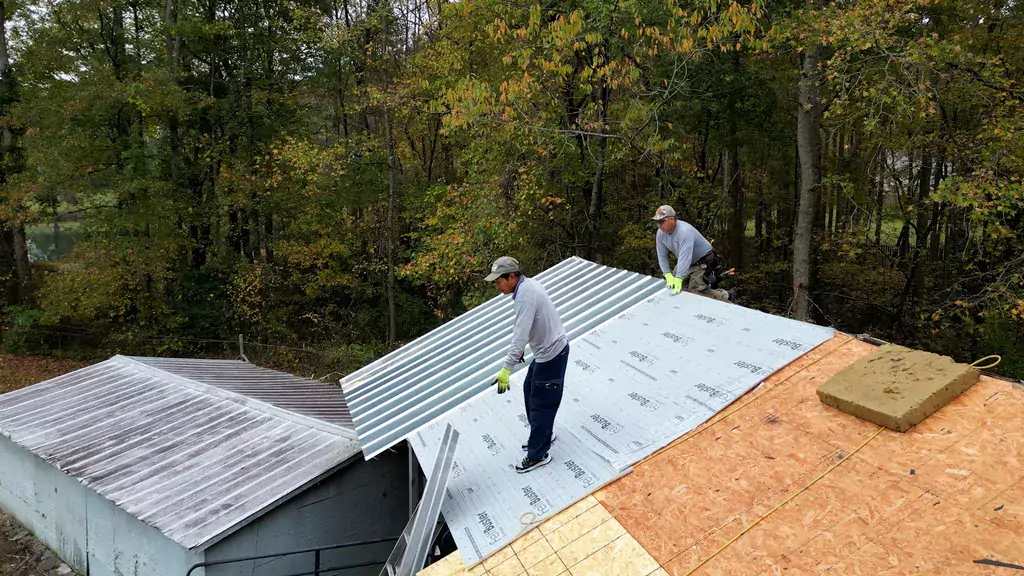
Why Homeowners in Prospect Are Choosing Metal Roofing
More homeowners in Prospect, Connecticut are replacing worn asphalt shingles with metal and it’s not hard to see why. Commercial metal roofing has long been the go-to choice for warehouses and office buildings, but that same durability is now showing up on residential streets across town. Connecticut winters are hard on roofs. Heavy snow, ice dams, freeze-thaw cycles, and the occasional nor’easter all take a toll. Metal holds up to those conditions better than most materials, and it does so for decades. If you’re weighing your options or just starting to research, this guide walks you through what you need to know: the materials, the process, the costs, and how to find a contractor who actually knows what they’re doing in Prospect.
What makes metal roofing a smart choice for Prospect homes
Asphalt shingles typically last 15 to 25 years. A properly installed metal roof can last 40 to 70 years, sometimes longer. According to a 2008 study by Oak Ridge National Laboratory on metal roof energy performance, metal roofing with a ventilated air gap can reduce summer cooling costs by up to 40% and cut winter heating losses by around 15%. For a home in Prospect where temperatures swing from humid summers to bitter winters, that’s a real difference in your energy bills.
Beyond longevity and efficiency, metal is 100% recyclable. Most new metal roofing panels contain a high percentage of recycled content, so you’re not contributing to the 20 billion pounds of asphalt shingles that go to landfills each year, according to metal roof environmental benefits.
Residential metal roofing also performs well in high wind. Interlocking panel systems are rated to withstand winds well above what asphalt can handle. For a home near the Naugatuck Valley corridor, where storms roll in with little warning, that matters.
There’s also the resale angle. Buyers increasingly recognize that a metal roof means fewer near-term repair costs. A metal roof is one of the few home upgrades that can return close to its full cost at resale, making it both a comfort investment and a financial one.
Metal roofing materials and options available in Prospect
Not all metal roofing is the same. The material you choose affects cost, appearance, longevity, and how the roof performs in Connecticut’s climate.
Steel roofing systems are the most common choice for both residential and commercial metal roofing in New England. Galvalume steel a blend of zinc, aluminum, and silicon-coated steel resists corrosion well and comes in a wide range of profiles and colors. It’s the practical choice for most Prospect homes.
A standing seam metal roof is the premium option within the steel category. Panels interlock at raised seams, hiding all fasteners. This makes the roof nearly watertight and reduces maintenance over time. Standing seam is the most popular choice for homeowners doing a full metal roof replacement who want a clean, modern look.
Corrugated metal roofing is the more budget-friendly profile. The wavy, ribbed panels are familiar on barns and agricultural buildings, but they’ve made their way onto residential homes with a more rustic or industrial aesthetic. Exposed fasteners mean slightly more maintenance over time, but corrugated metal still outlasts asphalt by a wide margin.
Stone-coated steel gives you the look of traditional shingles or tiles with a steel substrate underneath. It appeals to homeowners who want metal performance without the industrial appearance.
Aluminum is lighter than steel and naturally rust-resistant, making it a good option in coastal areas. For inland Prospect homes, it’s a solid but more expensive alternative to steel.
Metal roofing material comparison
| Material | Avg. Installed Cost (per sq ft) | Lifespan | Best For | Maintenance Level |
| Standing seam steel | $10–$17 | 50–70 years | Full replacement, modern homes | Low |
| Corrugated metal | $5–$9 | 30–45 years | Budget installs, rustic aesthetic | Moderate |
| Stone-coated steel | $9–$14 | 40–70 years | Traditional look with metal performance | Low |
| Aluminum | $11–$18 | 40–60 years | Corrosion resistance, coastal areas | Low |
| Galvalume steel panels | $7–$12 | 40–60 years | General residential, commercial metal roofing | Low |
How metal roof installation works in Prospect
Metal roof installation isn’t a weekend project. A properly done job follows a clear sequence, and cutting corners at any stage will cause problems later.
Step 1 — Inspection and tear-off
The contractor starts with a full inspection of your existing roof deck. If there’s significant rot or damage in the sheathing, that gets addressed before anything goes on top. In some cases, metal can be installed over existing shingles — but only if the deck is solid and local code allows it.
Step 2 — Underlayment installation
A high-quality synthetic or self-adhering underlayment goes down across the entire deck. This acts as a secondary moisture barrier and is especially important in Connecticut where ice dams are a real risk each winter.
Step 3 — Panel measurement and cutting
Metal roofing panels are cut or ordered to length. With standing seam systems, panels often run the full length of the roof pitch in a single piece, which reduces seams and leak points.
Step 4 — Panel installation
Panels are fixed to the deck using clips (for standing seam) or exposed fasteners (for corrugated profiles). For standing seam, a mechanical seamer locks the raised edges together, creating a continuous weather-resistant surface.
Step 5 — Flashing and trim
Flashing around chimneys, skylights, vents, and valleys is installed with care. This is where most roof failures happen, regardless of material. A contractor who rushes the flashing work creates problems you won’t notice until the next heavy rain.
Step 6 — Final inspection
A good contractor walks the roof after installation to check seams, fasteners, flashing, and edge trim. You should expect a written warranty on both materials and labor.
Worth noting: the Prospect Building Department enforces Connecticut State building codes for roofing work. According to the Town of Prospect Building Department, a building permit is required for roofing work that exceeds 25% of the roof covering within a single calendar year. Your contractor should pull the permit on your behalf. If they suggest skipping it, that’s a warning sign.
What affects the cost of metal roofing in Prospect, CT
Metal roof replacement in Prospect CT costs more upfront than asphalt. That’s just the reality. A full residential metal roofing project in Connecticut typically ranges from $12,000 to $30,000 or more, depending on several factors.
Roof size and complexity
Are the biggest cost drivers. A simple gable roof on a 1,500 sq ft home costs far less than a hip roof with dormers, valleys, and multiple penetrations. Every added feature means more cutting, more flashing, and more labor time.
Material choice
Shifts the number significantly. Corrugated metal panels on a straightforward roof can come in at the lower end of the range. A full standing seam installation with a premium Galvalume coating will sit at the higher end.
Tear-off costs
Add $1 to $3 per square foot if the existing roof needs to come off first. On a larger home, that’s a meaningful addition to the total.
Permit fees
Through the Town of Prospect Building Department are relatively modest but required for qualifying projects. Factor in a few hundred dollars for the permit itself.
Labor rates
In the greater Waterbury and New Haven County area reflect a skilled trade, not a commodity service. Experienced metal roofing contractors typically charge more per square than a general roofer but the installation quality is usually worth it. Shoddy fastening on metal panels leads to oil-canning, leaks, and panel movement over time.
The long-term math works in metal’s favor. Over a 50-year period, you’d likely replace an asphalt roof two or three times. A single metal installation, properly maintained, outlasts all of them.
How to choose the right metal roofing contractors in Prospect
Not every roofing company that installs metal actually specializes in it. Metal roof installation requires specific techniques, tools, and product knowledge that general roofers don’t always have. Asking the right questions before signing anything will save you from expensive problems later.
Ask how many metal roof installations they’ve completed in the past two years. Ask specifically whether they’ve worked with standing seam systems, since those require a mechanical seamer and the skill to use it properly. Ask for references from Connecticut homeowners not just photos and follow up on them.
Check that the contractor is licensed in Connecticut, carries general liability insurance, and holds workers’ compensation coverage. Public Act 96-216 in Connecticut requires proof of workers’ compensation coverage before a building permit can be issued. Your contractor should be able to show you that documentation without hesitation.
A contractor who focuses specifically on residential and commercial metal roofing in the Prospect and greater Naugatuck Valley area like First Relief will have navigated the local permit process, knows which panel systems perform well through Connecticut winters, and carries the trade-specific insurance that general contractors often skip.
Get at least three quotes. The lowest bid isn’t always the best choice, but neither is the highest. Look for a written proposal that breaks out material costs, labor, permit fees, and warranty terms. If a quote is vague, ask for a line-by-line breakdown.
Conclusion
Metal roofing is a long-term investment, and the decision deserves careful thought. If you’ve been weighing the costs, the materials, and the right timing, the next move is getting a proper assessment of your current roof and a clear quote. First Relief works with homeowners throughout Prospect and the surrounding area on residential and commercial metal roofing projects, and they can walk you through your material options without any pressure. Reach out to First Relief to schedule an on-site evaluation and get an itemized estimate that accounts for your home’s specific roof profile, the current condition of your decking, and what the permit process will look like for your project.
FAQ’s
Do I need a permit for metal roof replacement in Prospect?
Yes, in most cases. The Town of Prospect Building Department requires a building permit for roofing work that replaces more than 25% of your roof covering within a single calendar year. Your contractor should handle the permit application. Before work starts, confirm they’ve pulled it.
How long does a metal roof last in Connecticut?
A quality steel or Galvalume roof installed correctly will typically last 40 to 70 years. Standing seam systems often come with 50-year material warranties. Connecticut’s climate — including snow loads, ice dams, and summer heat — is well within the performance range these systems are designed for.
Is metal roofing louder than asphalt during rain?
Not in most modern installations. Metal roofs installed over solid decking with a quality underlayment are no louder than asphalt. The rain-on-metal sound associated with older barn roofs is largely a product of an open structure beneath, not the metal itself.
What does metal roof installation cost in Prospect, CT?
Most homeowners in Prospect pay between $12,000 and $30,000 for a full residential metal roofing installation. The wide range reflects differences in roof size, pitch, material choice, and whether tear-off is required. Get multiple quotes from experienced metal roofing contractors before committing.
Can a metal roof be installed over my existing shingles?
Sometimes. Connecticut building code and structural considerations both factor in. If your roof deck is solid and the code permits it, an overlay installation saves tear-off costs. A reputable contractor will inspect the existing deck first and advise you honestly.
How does metal roofing handle snow and ice dams in Connecticut winters?
Metal roofs shed snow more easily than asphalt because of their smooth surface. Ice dams are still possible if your attic isn’t properly insulated and ventilated — but a well-installed metal roof with a self-adhering ice-and-water barrier along the eaves reduces the risk of interior water damage significantly.