


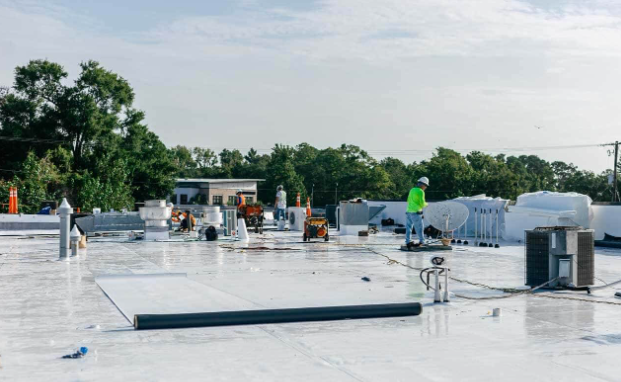
Residential Roofing Services for Homes in Downtown Louisville, KY
Need Affordable residential roofing in Downtown Louisville, KY? Compare asphalt, metal, and slate options, costs, permits, and how to choose a local contractor.
Your roof is the first line of defense against Kentucky’s unpredictable weather. In Downtown Louisville, where historic shotgun homes sit beside modern condos and converted warehouses, that defense takes a beating every year. Spring thunderstorms peel shingles. Summer heat bakes them brittle. Winter ice dams back water under flashing. When leaks appear or shingles start curling, finding a reliable roofer becomes urgent.
What Residential Roofing Involves and Why Downtown Louisville Homeowners Need It
Residential roofing covers installation, repair, and replacement of roof systems on single-family homes, townhouses, and small multi-family buildings. In Downtown Louisville, we see three main reasons homeowners call for help: storm damage, age-related wear, and upgrades for energy efficiency or resale value.
Kentucky averages 45 to 50 inches of rainfall each year, with severe thunderstorms and occasional tornadoes causing significant damage [^53^0^]. The National Weather Service reports that spring storms in the region are becoming stronger and more frequent [^53^7^]. High winds lift shingles. Hail bruises granules. Heavy rain finds its way through cracked flashing. A small leak today can rot rafters, ruin insulation, and spawn mold within months.
Home values in Louisville rose 7.6% year-over-year as of August 2025, with homes selling in about 38 days [^52^3^]. A new roof signals to buyers that the property has been maintained. It also prevents inspection failures that kill deals. For homeowners staying put, modern materials like reflective metal can cut cooling costs by 10% to 25% during humid Kentucky summers [^53^5^].Professional residential roofing in Downtown Louisville, KY
Types of Roofing Materials: Pros, Cons, and Local Suitability
Choosing a material means balancing upfront cost, lifespan, and how well it handles Kentucky’s climate. Here is how the main options compare for Downtown Louisville properties.
Metal roofing has gained ground because of its storm resistance and energy efficiency. Standing seam panels resist hail, shed snow to prevent ice dams, and reflect solar heat that asphalt absorbs [^53^5^]. The upfront cost is higher—$20,000 to $36,000 for a 2,000-square-foot home—but the cost per year over a 50-year lifespan is comparable to asphalt [^53^5^]. Many insurance companies offer discounts for impact-resistant metal systems.
Slate roofing appears on historic homes in Old Louisville and the Highlands. It lasts over a century, resists fire and rot, and adds significant curb appeal. The weight is the main concern—some older homes need structural reinforcement before slate can be installed. Costs can exceed $50,000 for a full replacement [^53^15^].
The Roof Installation Process Step by Step
A professional roof replacement follows a strict sequence. Understanding it helps you plan around weather, inspections, and disruption.
Step 1: Inspection and Estimate
Your contractor examines the shingles, flashing, decking, and ventilation. They look for soft spots in the plywood, signs of water intrusion, and damaged fascia. In Downtown Louisville, we often find multiple layers of old shingles on historic homes, which must be removed before new material goes down.
Step 2: Permitting
Louisville Metro requires a permit for full roof replacements and major repairs affecting more than 25% of the roof area [^52^0^]. The permit fee ranges from $75 to $300, and processing takes 1 to 2 weeks [^52^0^]. Your contractor pulls the permit and schedules inspections. Work in Old Louisville or other historic districts may require a Certificate of Appropriateness from the Louisville Landmarks Commission [^52^0^].Top residential roofing in Downtown Louisville, KY
Step 3: Tear-Off and Deck Inspection
The crew removes old shingles, felt, and nails. They inspect the roof deck for rot, which is common in humid climates like Louisville’s. Damaged plywood sections get replaced at roughly $2 to $5 per square foot.
Step 4: Underlayment and Flashing
New synthetic underlayment covers the deck. Ice and water shield goes along eaves and in valleys. Flashing gets replaced around chimneys, dormers, and wall intersections. Kentucky’s freeze-thaw cycles make proper ice barrier installation critical [^51^8^].
Step 5: Shingle or Panel Installation
Shingles get nailed according to manufacturer specs and local wind codes. Metal panels are seamed and fastened. Slate or tile is set with proper overlap and fastening. Proper nailing pattern is critical—Louisville’s wind exposure requires six nails per shingle in many zones.
Step 6: Ventilation and Cleanup
Ridge vents, soffit vents, or powered fans get installed to move hot air out of the attic. Kentucky’s humidity makes ventilation essential for roof longevity [^53^0^]. The crew cleans up debris with magnetic rollers.
Step 7: Final Inspection
The building inspector checks that the work matches the permit and complies with the Kentucky Residential Code. They verify flashing, fastening patterns, and ventilation. Once approved, you receive final documentation.
A licensed contractor in Louisville noted that many homeowners delay calling until they see water stains inside. By then, the decking is often rotted and the repair bill has doubled. Annual inspections—especially after spring storm season—catch problems early.
What Drives Roofing Costs in Downtown Louisville
Pricing varies based on five factors: material, roof size and pitch, labor, preparation, and permits.
Material Choice
This is the biggest variable. Asphalt shingles for a 2,000-square-foot home might cost $7,000 to $12,000. Metal roofing pushes that to $14,000 to $25,000. Slate or tile can reach $20,000 to $50,000 or more [^53^15^].
Roof Size and Complexity
A simple gable roof with two planes costs less than a roof with multiple valleys, dormers, or steep pitches. Each additional plane adds labor and waste. Steep roofs require safety equipment and slow down the crew, adding 20% to 30% to labor costs.
Labor Rates
Louisville roofing labor runs $150 to $275 per roofing square, or $45 to $85 per hour [^53^1^]. This is slightly below the national average but reflects local demand and the skill required for proper installation.Trusted residential roofing in Downtown Louisville, KY
Removal of Old Roof
Tearing off existing shingles adds $1 to $2 per square foot [^53^0^]. Homes with multiple layers or asbestos-containing materials from before 1980 require special handling and disposal, which adds cost.
Permits and Fees
Louisville Metro charges $75 to $300 for roofing permits [^52^0^]. Historic district properties may incur additional review fees. Reinspections cost extra if corrections are needed.
For a typical 2,000-square-foot home in Downtown Louisville, budget $8,000 to $15,000 for an architectural shingle replacement. Metal roofs start around $14,000 and climb from there.
How to Choose the Right Roofing Contractor in Downtown Louisville
Hiring a roofer is about more than price. A bad installation leaks, voids warranties, and creates liability issues.
Verify Local Licensing
Kentucky does not require a state roofing license, but Louisville Metro requires contractors to hold a current building license to pull permits [^52^5^]. The Kentucky Roofing Contractors Association (KRCA) offers voluntary certification that requires $1 million in liability insurance, a $10,000 bond, and continuing education [^52^5^]. Ask for the license or certification number and verify it.
Check Insurance and Bonding
Your contractor must carry general liability insurance and workers’ compensation [^52^5^]. Request a certificate of insurance naming you as the certificate holder. The KRCA bond protects you if the contractor abandons the job or does shoddy work.
Ask About Local Experience
Downtown Louisville’s mix of historic Victorians, mid-century ranches, and modern condos creates unique challenges. A contractor who has worked in Old Louisville, the Highlands, and Butchertown will know the local permit offices, historic district rules, and common roof geometries. Ask for local references.
Review the Warranty
Material warranties from manufacturers like GAF, Owens Corning, or Atlas can last 25 to 50 years. Workmanship warranties from the contractor typically run 1 to 5 years. Make sure you understand what each covers and who handles claims.
Get Everything in Writing
A proper contract includes the scope of work, material brands and colors, start and completion dates, payment schedule, and cleanup responsibilities. Never pay the full amount upfront. A reasonable deposit is 10% to 30%, with final payment due after final inspection.
A contractor who works exclusively on residential roofing in Downtown Louisville—like Bluegrass Brothers Roofing Contractors—will have handled the local permit process, know which materials hold up under Kentucky’s storms, and carry the trade-specific insurance that general handymen often skip. That local focus matters when your home must survive the next severe weather event.
Frequently Asked Questions
What is residential roofing?
Residential roofing covers installation, repair, and replacement of roof systems on homes and small multi-family buildings. It includes asphalt shingles, metal panels, slate, tile, and flat membrane systems.
How much does a new roof cost in Downtown Louisville?
Asphalt shingles run $1.50 to $5.95 per square foot installed [^53^0^]. A typical 2,000-square-foot home costs $7,000 to $15,000. Metal roofing costs $6.50 to $9.15 per square foot, or $14,000 to $25,000 total [^53^0^][^53^5^]. Slate and tile can exceed $20,000 to $50,000 [^53^15^].
Do I need a permit to replace my roof in Louisville?
Yes. Louisville Metro requires a permit for full roof replacements and repairs affecting more than 25% of the roof area [^52^0^]. Fees range from $75 to $300. Historic districts like Old Louisville require additional approval from the Landmarks Commission [^52^0^].
How long does a roof last in Louisville’s climate?
Asphalt shingles last 15 to 30 years in Kentucky’s humid subtropical climate with severe storms [^53^0^]. Metal roofs last 40 to 70 years. Slate can exceed 100 years [^53^13^]. Regular maintenance and proper ventilation extend any roof’s lifespan.
What is the best roofing material for Kentucky weather?
Architectural asphalt shingles with high wind ratings work well for most homes. Metal roofing offers superior hail resistance and energy efficiency but costs more upfront [^53^5^]. Both handle Kentucky’s storms better than three-tab shingles.
How long does a roof replacement take?
Most residential projects take 1 to 3 days for asphalt shingles. Metal roofs may take 3 to 5 days. Complex designs, steep pitches, or hidden deck damage can extend the timeline.
Can I install a new roof over my old shingles?
Louisville allows up to two layers of shingles, but most contractors recommend a full tear-off [^53^0^]. Removing the old roof lets the crew inspect the deck, fix hidden damage, and install proper underlayment. It also avoids excess weight on the structure.
Does a new roof increase my home’s value?
Yes. A new roof typically returns 60% to 70% of its cost at resale [^53^0^]. In Louisville’s competitive market, where homes sell in about 38 days, a new roof also speeds up the sale process and attracts more buyers [^52^3^].
What should I do if my roof leaks during a storm?
Place a bucket under the leak and move valuables out of the way. Call a roofing contractor for an emergency tarp or repair as soon as the weather clears. Document the damage with photos for your insurance claim.
How do I verify a roofing contractor’s credentials in Kentucky?
Check the Louisville Metro business license status and verify KRCA certification if claimed [^52^5^]. Ask for proof of insurance and the $10,000 bond. Read reviews on Google, BBB, and Angi.
What causes algae streaks on roofs in Louisville?
Humid subtropical climates promote algae growth on north-facing and shaded roof slopes. Algae-resistant shingles contain copper granules that inhibit growth. Regular cleaning with a mild bleach solution also helps.
When is the best time to replace a roof in Louisville?
Spring and fall offer the best conditions—moderate temperatures and fewer severe storms [^53^0^]. Summer heat makes shingles soft and harder to install properly. Winter ice can create safety hazards for crews.
Conclusion
Your roof protects everything inside your home. In Downtown Louisville, where historic charm meets modern living and severe weather is a regular threat, keeping that roof in good condition is not optional. Start with a professional inspection, understand your material options, and hire a licensed contractor who knows the local codes and climate.Right residential roofing in Downtown Louisville, KY
If you want a local team that understands Downtown Louisville’s architecture and weather challenges, Bluegrass Brothers Roofing Contractors offers assessments and can walk you through repair or replacement options without pressure.