


Roof Repair in Louisville: What Homeowners Need to Know
Learn Affordable roof repair in Louisville costs, materials, and storm damage tips in Louisville. Get expert advice on choosing contractors and protecting your Kentucky home.
Your roof is the first line of defense against Kentucky’s unpredictable weather. In Louisville, where humid summers, sudden spring tornadoes, ice storms, and freeze-thaw cycles all test your shingles, roof problems can appear without warning. A small leak after a thunderstorm can turn into rotted decking and interior damage if you wait too long to act.
According to the National Roofing Contractors Association, regular inspections and prompt repairs can extend a roof’s lifespan by up to 25%. In a climate like Louisville’s, where thermal shock from rapid temperature swings cracks seals and materials, that maintenance gap is the difference between a 25-year roof and one that fails at 15.
Common Roof Problems and Repair Options in Louisville
Not every roof issue needs the same fix. The cause, severity, and location of damage all affect the approach and cost.
Missing or damaged shingles are the most common problem.
High winds lift shingles, hail bruises them, and UV exposure makes them brittle. Repair involves removing the damaged shingles, inspecting the underlayment, and installing new ones with proper nail patterns. In Louisville, architectural asphalt shingles are the standard. They cost less to repair than metal and blend with most neighborhoods. A few missing shingles cost $150 to $500 to fix.
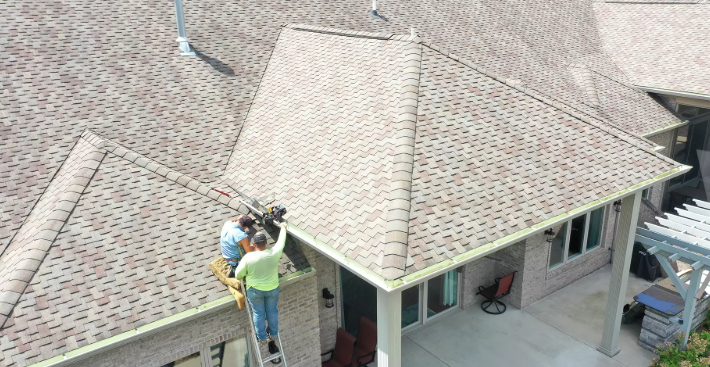
Flashing failures around chimneys, vents, and valleys cause persistent leaks. The metal strips that seal these transitions corrode, pull loose, or crack over time. Repair involves removing old flashing, cleaning the surface, and installing new step flashing or counterflashing with sealant. This work costs $200 to $800 depending on accessibility and material. Professional roof repair in Louisville
Ventilation and gutter issues contribute to roof failure.
Poor attic ventilation traps heat and moisture, which warps decking and accelerates shingle aging. Clogged gutters overflow and rot fascia boards. Repair may involve adding ridge vents, replacing soffit vents, or installing gutter guards. These fixes cost $300 to $1,200.
Storm damage from wind, hail, or falling branches requires immediate attention. After severe weather, emergency tarping prevents further water intrusion. Then a full inspection documents damage for insurance. In Louisville, where spring storms bring golf-ball-sized hail and straight-line winds, post-storm repairs are a regular part of roofing work.
The Roof Repair Process Step by Step
A professional roof repair follows a clear sequence. Skipping steps or guessing leads to callbacks, leaks, and wasted money.
The first step is inspection and diagnosis.
A technician examines the roof surface, attic, and interior ceilings. In Louisville, this includes checking for algae streaks, hail bruising, and ice dam damage along eaves. The inspector looks at flashing, vents, gutters, and the condition of the decking beneath the shingles. They document everything with photos, which supports insurance claims if storm damage is involved.
Next comes scope definition and estimate.
The contractor explains what they found, which repairs are needed, and why. They provide a written estimate with line-item costs for materials, labor, and disposal. In Louisville, the Kentucky Roofing Contractors Association recommends getting at least three estimates for repairs over $1,000. Companies like Bluegrass Brothers Roofing Contractors that specialize in roof repair across Louisville provide detailed scopes that help homeowners understand exactly what they are paying for.
Permit pulling follows if required.
Louisville Metro requires permits for roof replacements and structural repairs. Minor repairs like shingle replacement or flashing repair typically do not need permits. Your contractor should know the difference and handle any required paperwork. The Louisville Metro Department of Codes and Regulations issues permits and schedules inspections.
Repair execution is where the work happens.
The crew removes damaged materials, installs new shingles or flashing, replaces rotted decking, and seals all penetrations. They match new shingles to existing ones as closely as possible. In Louisville’s variable climate, they use ice and water shield in valleys and along eaves to prevent winter leaks. Proper nailing patterns and sealant application prevent wind blow-off during spring storms.Top roof repair in Louisville
Cleanup and final inspection complete the job.
The crew removes all debris, runs a magnetic sweeper for nails, and inspects the repair from the ground and the attic. The contractor provides a workmanship warranty and explains any maintenance needed. For insurance-related repairs, they provide documentation that the work meets claim requirements.
What Roof Repair Costs in Louisville
Costs in Louisville align with national averages but vary by material, accessibility, and damage severity.
Minor repairs like replacing a few shingles or sealing a small leak cost $150 to $500. These are same-day jobs that most homeowners can budget for without financing.
Moderate repairs involving flashing replacement, partial decking repair, or gutter work run $500 to $1,500. These jobs take one to two days and may require scaffolding or specialized materials.
Major repairs including extensive decking replacement, structural fixes, or storm damage restoration cost $1,500 to $5,000 or more. These approach the cost of a partial roof replacement and may be better handled as a full replacement if the roof is near the end of its life.
Several factors push costs higher in Louisville specifically.
The city’s mix of historic and modern homes means some roofs have steep pitches or complex geometries that require extra labor. Humidity and algae growth mean some repairs include treating the roof surface to prevent future streaking. And the freeze-thaw cycles of Kentucky winters require better underlayment and ice protection than warmer climates.
Material costs matter too.
Architectural asphalt shingles cost $4 to $6 per square foot installed for repairs. Metal roofing repairs cost $8 to $16 per square foot. Tile repairs are the most expensive at $10 to $20 per square foot, though tile is rare in Louisville due to weight concerns on homes not originally framed for it.Trusted roof repair in Louisville
Labor represents 60 to 70% of repair costs. Kentucky roofers earn a mean annual wage of $47,450 according to the Bureau of Labor Statistics, which is below the national average of $53,030. That keeps Louisville labor costs reasonable compared to coastal cities.
How to Choose the Right Roof Repair Contractor
Not every person with a ladder and a truck can handle roof repairs properly. Kentucky has no state-level roofing license, which means anyone can call themselves a roofer. This makes vetting contractors especially important.
A contractor who works exclusively on roof repair in Louisville — like Bluegrass Brothers Roofing Contractors — will have handled the local weather patterns many times. They know how Ohio River Valley humidity affects shingles. They understand which materials resist thermal shock from Louisville’s rapid temperature swings. They carry the insurance and bonds that uncertified contractors often skip.
Kentucky does not require state roofing licenses, but the Kentucky Roofing Contractors Association offers voluntary certification. KRCA-certified contractors must carry at least $1 million in general liability insurance, a $10,000 judgment bond, and workers’ compensation coverage. In Louisville specifically, contractors must hold a Louisville Metro building contractor license to pull permits. License A allows multiple projects per year; License B limits the contractor to one project annually.
Ask these questions before hiring:
- Are you certified by the Kentucky Roofing Contractors Association?
- Do you hold a Louisville Metro building contractor license?
- Will you provide a written estimate with line-item costs?
- What is your workmanship warranty on repairs?
- Can I see references from recent Louisville roof repair projects?
A contractor who cannot answer clearly, who quotes only a verbal estimate, or who demands full payment upfront is a risk. Reputable Louisville roofers provide written proposals, explain their repair approach, and offer payment schedules tied to job milestones.
Frequently Asked Questions
How much does roof repair cost in Louisville?
Minor repairs cost $150 to $500. Moderate repairs run $500 to $1,500. Major repairs cost $1,500 to $5,000 or more. The exact price depends on damage extent, material type, roof pitch, and accessibility.
Do I need a permit for roof repair in Louisville?
Minor repairs like shingle replacement or flashing repair typically do not require permits. Roof replacements and structural repairs do require permits from Louisville Metro. Your contractor should know the difference and handle any required permits.Right roof repair in Louisville
What are the most common causes of roof damage in Louisville?
Wind and hail from spring storms are the leading causes. Ice dams in winter force water under shingles. UV exposure and thermal shock from rapid temperature swings crack shingles and sealant. Humidity promotes algae and moss growth that degrades surfaces.
How long does a roof repair take?
Minor repairs take 2 to 4 hours. Moderate repairs take one to two days. Major repairs take 2 to 5 days. Weather delays are common in Louisville, especially during spring storm season and winter freeze-thaw periods.
Should I repair or replace my roof?
Repair makes sense when damage is isolated and the roof is under 15 years old. Replace when damage is widespread, leaks recur, or the roof is nearing the end of its expected life. A professional inspection gives you a clear recommendation.
Does insurance cover roof repair in Louisville?
Homeowners insurance covers sudden, accidental damage from wind, hail, or falling trees. It does not cover normal wear and tear or leaks from neglected maintenance. Document storm damage with photos and get a professional inspection to support your claim.
What roofing material lasts longest in Louisville’s climate?
Metal roofing lasts 40 to 60 years and handles hail, wind, and thermal shock better than asphalt. Architectural asphalt shingles last 25 to 30 years and are the most cost-effective choice for most homes. Tile lasts 50 to 100 years but is rarely used in Louisville due to structural weight requirements.
How do I spot roof damage after a storm?
Look for missing, lifted, or creased shingles. Check gutters for granule buildup. Inspect flashing for looseness or cracks. Look inside for water stains on ceilings or walls. Schedule a professional inspection even if damage is not visible from the ground.
What is the Kentucky Roofing Contractors Association certification?
KRCA is a voluntary certification program for Kentucky roofers. Certified contractors must carry $1 million in liability insurance, a $10,000 bond, and workers’ compensation. They also commit to continuing education and a code of ethics. Hiring a KRCA-certified contractor adds a layer of protection.
How often should I inspect my roof in Louisville?
Inspect your roof twice yearly — in spring after winter weather and in fall after storm season. Also inspect after any severe weather event. Professional inspections every three to five years catch issues you might miss.
Can I repair my roof myself?
You can handle minor tasks like gutter cleaning if you have proper safety equipment. Roof work is dangerous and requires experience. Improper repairs void manufacturer warranties and create liability issues. Most Louisville homeowners hire licensed professionals for anything beyond basic maintenance.
What should I do if my roof is leaking?
Contain the water inside with buckets and move valuables away. Call a contractor for emergency tarping if the leak is severe. Document damage with photos for insurance. Do not attempt to patch the roof yourself during active rain. A professional can safely assess and seal the source.
Conclusion
Your roof protects everything beneath it. In Louisville, where weather changes fast and every season brings a different threat, staying ahead of damage is the smartest move you can make. Start with a professional inspection, get a clear repair scope and estimate, and hire a contractor who knows the local codes and climate.
If you want a local team that understands Louisville’s conditions, Bluegrass Brothers Roofing Contractors offers free roof inspections and can walk you through your repair options without pressure.